
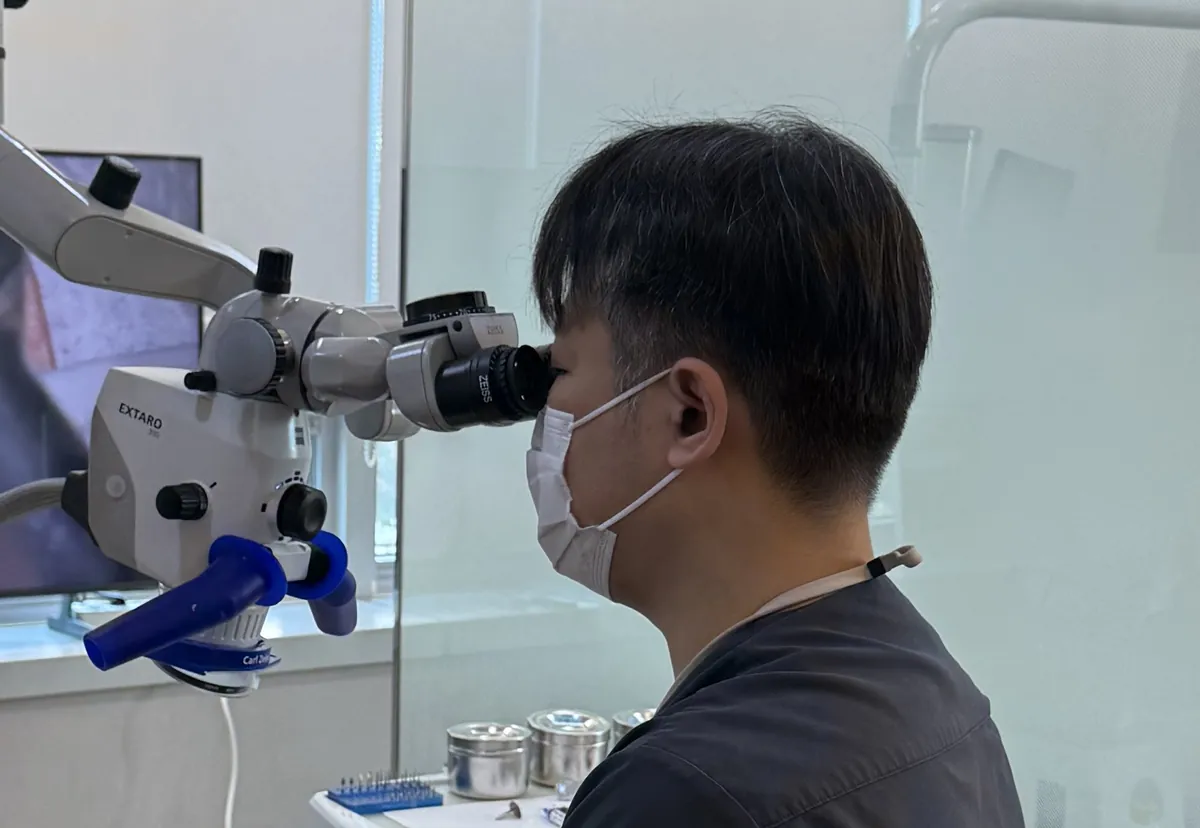
Microscope dentistry is precision treatment that uses a dental surgical microscope to magnify the inside of a tooth from several to dozens of times and light it brightly, so the dentist can see narrow canals, cracks and remaining inflamed tissue that are hard to detect with the naked eye.
What is microscope dentistry?
The nerve canals (root canals) inside a tooth are very narrow and curved, and their number and shape differ from tooth to tooth. One reason pain can remain or return after root canal treatment is a canal that was not found or infected tissue that was left behind. A microscope magnifies and illuminates these areas so they can be checked during treatment.
Besides root canal treatment, the microscope is used for many procedures that require precision, such as diagnosing fine cracks in teeth, removing broken instruments, and apical surgery to remove inflammation at the tip of the tooth root.
We preserve natural teeth as much as possible
Soul Dental Clinic's philosophy is clear: to preserve natural teeth as much as possible. Because no restoration or implant can fully replace your own natural tooth, we consider extraction only as a last resort and first look for ways to save the tooth. Microscope dentistry and VPT (vital pulp therapy) are key ways we put this philosophy into practice.
- Extraction as a last resortEven for a tooth you were told would be hard to keep, we take another look with a microscope exam and first consider whether it can be saved.
- Treatment that saves the nerveEven when decay is deep, if the conditions are right, we preserve the nerve with VPT rather than removing it entirely.
- Restorations that conserve tooth structureWe first consider restoration methods that remove less tooth structure, and help treated teeth last with regular check-ups.
What is VPT (vital pulp therapy)?
VPT (Vital Pulp Therapy) is used when decay has come close to the nerve (pulp) or partially exposed it. Instead of root canal treatment, which removes the entire nerve, only the infected part is removed and the remaining nerve is kept alive. A biocompatible material such as MTA (Mineral Trioxide Aggregate) is placed over the exposed pulp to protect it, and then sealed with a filling or restoration.
Keeping the nerve alive has the advantage of maintaining the tooth's nutrient supply and sensation. Preserving the nerve is especially important in growing teeth and teeth whose roots are not yet fully formed.
- Who it is for — teeth with deep decay, teeth with a partially exposed nerve due to injury, and teeth without spontaneous pain or at the reversible inflammation stage
- Treatment process — check and remove decay and infected pulp under the microscope → protect the pulp with MTA or a similar material → seal with a restoration → regular follow-up
- Please note — if inflammation has already spread through the entire nerve, or if pain persists after treatment, root canal treatment may be needed. We will explain whether VPT is possible based on your examination results before treatment.


Who is it for?
- People who still have pain or discomfort after root canal treatment
- People who have been told they need root canal retreatment
- People with deep decay who want to save the nerve (VPT)
- People who have been told their canals are narrow or calcified and difficult to treat
- People with a tooth that feels sensitive when chewing, suggesting a possible crack
- People who want to preserve their natural teeth as much as possible instead of having them extracted
Treatment process
- STEP 1Examination · ImagingX-rays and, if needed, a 3D CT scan are used to check the number and shape of the root canals and the extent of inflammation.
- STEP 2Root canal treatment under the microscopeAfter anesthesia, we locate the canal openings under magnification and remove the infected nerve tissue and clean the canals.
- STEP 3Root canal fillingThe cleaned canals are sealed to prevent reinfection. Several visits may be needed depending on the tooth's condition.
- STEP 4RestorationTeeth that have had root canal treatment tend to become weaker, so we protect them with a crown or similar restoration.
Microscope Dentistry at Soul Dental Clinic
- Use of a surgical microscopeWe treat while checking canal openings, cracks and remaining tissue under magnification and illumination.
- Natural tooth preservation firstBefore extraction, we first consider whether the tooth can be preserved, and if the conditions are right, we save the nerve as well with VPT. We explain the treatment process and prognosis honestly.
- Coordinated careAfter root canal treatment, the necessary restoration (crown) is carried out at the same clinic.
Aftercare and precautions
- Do not chew hard foods with the tooth under treatment. If the temporary filling comes out, please contact us right away.
- You may feel some mild discomfort for a few days after treatment; if the pain gets worse, please come in so we can check.
- After root canal treatment is finished, it is important not to postpone the planned crown or restoration.
- After VPT, we regularly check for pain and the condition of the pulp, and switch to root canal treatment if necessary.
Frequently asked questions
When is microscope dentistry needed?
We use the microscope when pain remains after root canal treatment, when root canal retreatment is needed, when the canals are narrow and complex, when a fine crack in the tooth is suspected, or when apical surgery (surgery at the root tip) is needed.
What is VPT (vital pulp therapy)?
When decay is deep enough to reach close to the nerve (pulp), this treatment removes only the infected part instead of the entire nerve, then covers it with a biocompatible material such as MTA to keep the nerve alive. Preserving the nerve increases the likelihood that the tooth will stay healthy for a long time. However, if pain continues or inflammation progresses after treatment, root canal treatment may be needed, so we check the progress regularly.
How do you decide whether the nerve can be saved?
We decide by considering the depth of the decay, the pattern of pain, and the condition of the pulp as seen on X-rays and under the microscope. If there are no symptoms or the inflammation is reversible, we recommend VPT; if the inflammation has spread through the entire nerve, we recommend root canal treatment.
Does using a microscope make treatment take longer?
Because we work carefully under magnification, each appointment may take somewhat longer, but the goal is to check areas that are easy to miss right from the start. The total number of visits depends on the condition of the tooth.
How is it different from conventional root canal treatment?
The principle of treatment is the same. The difference is that a surgical microscope magnifies and illuminates the inside of the tooth, so we can work while checking canal openings, remaining nerve tissue and fracture lines that are hard to see with the naked eye.
Book a Microscope Dentistry Consultation
After an examination and consultation, we will explain in detail whether treatment is possible and what it involves.